In early 2022, I finished the first draft of When the Band Played On knowing I’d have to cut 75,000 words to get it down to the size my editor wanted to publish. Along the way, I had to make some hard choices about what to keep and what to leave out. Here’s the first in an occasional series I’m calling The Shilts Files: What I Know About America’s Trailblazing Gay Journalist.
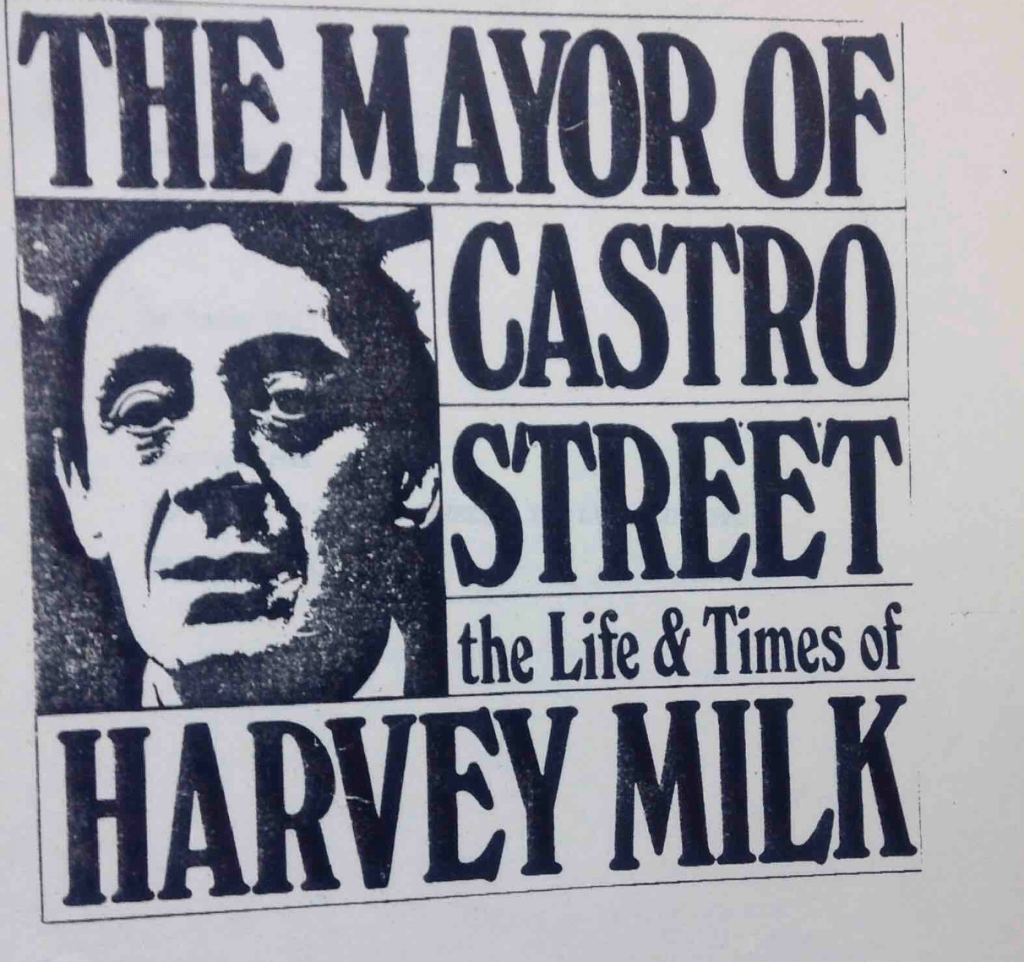
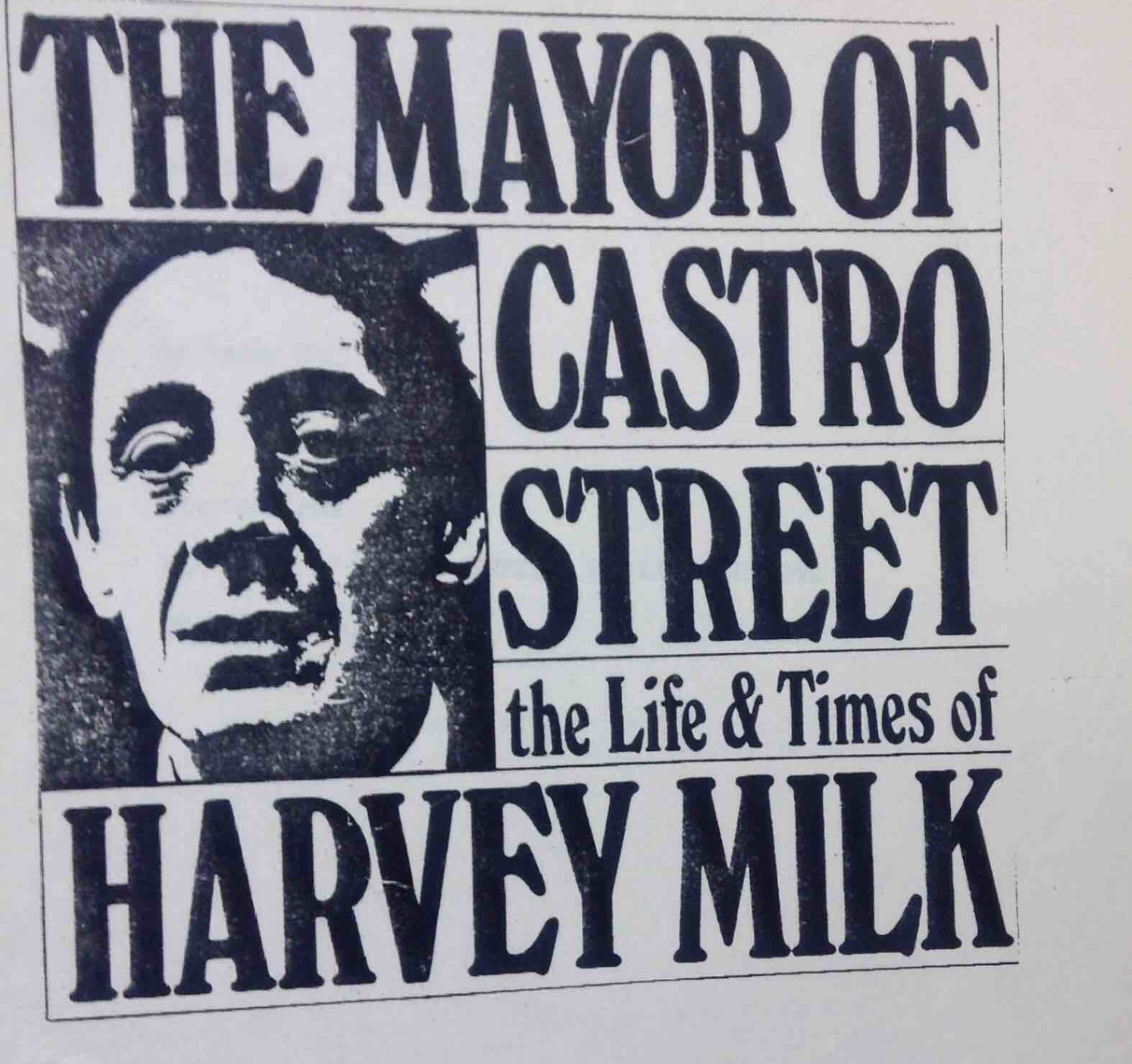
In commemoration of what would’ve been Harvey Milk’s 96th birthday, this first installment offers more details on Randy’s relationship with the perpetual candidate for public office, whose election to San Francisco’s Board of Supervisors made history in 1977. Not only did Harvey run as an openly gay individual, but he also represented a majority-gay political district, likely one of the first (or only) in the country up until that point. Randy’s first book, The Mayor of Castro Street, was the first to elevate Harvey’s life and pioneering activism into the imagination of mainstream readers.
Outsiders, Women, and Young Punk Kids
Milk took some of his greatest pleasure from the company of young people, and not just the young men he so brazenly romanced. “Harvey was a very good friend of mine,” Randy’s friend Howie Klein remembered. [Klein would later make a name for himself as a wildly successful record label executive and outspoken political activist.] Next door to Harvey’s Castro Camera shop sat Aquarius Records, the owner of which became Howie’s partner in a startup record company. “I would go literally back and forth between the two stores constantly,” Howie added. “[and] Harvey asked me 100 times to watch the store for him.”
Following his 1976 loss to Art Agnos in the State Assembly race, Harvey had organized the San Francisco Gay Democratic Club as a progressive counter to the moderate Alice B. Toklas club. Following Anita Bryant’s Miami victory and the murder of San Francisco’s Robert Hillsborough, Milk’s latest campaign ran on optimism, determination, and a sense of inevitability, galvanized by a quarter million-strong turnout for Gay Freedom Day in June 1977. For those who embraced Harvey’s hardscrabble, perpetually broke campaigns, the energy of those encounters felt both reciprocal and revolutionary. “We saw ourselves as pioneers,” activist and Milk protégé Cleve Jones recalled. “We knew that we were part of something unique and special, that might well have really profound significance for many millions of people over many decades, but it was still kind of tenuous and seemed very fragile. So we were sometimes, I think, a little bit hysterical.”
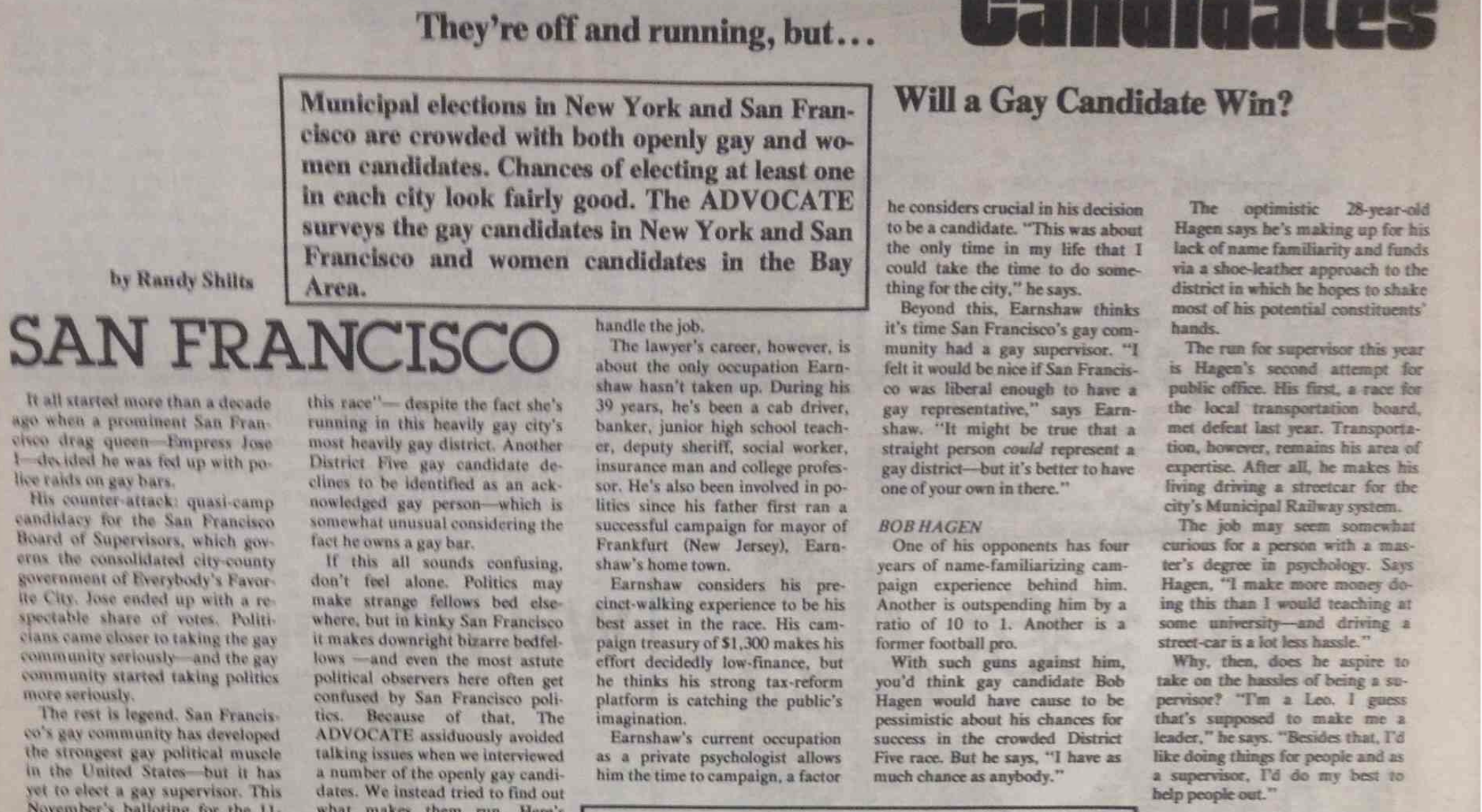
At the moment, all eyes were on the upcoming city elections, as San Franciscans had voted to reform the Board of Supervisors by implementing district representation. Harvey had won around seventy percent of the new Fifth District’s votes in his loss to Agnos, but with moderate gays and downtown business groups lining up to stop him, the ballot was packed with candidates. With bathhouse owner Rick Stokes (a Democratic moderate) the clearest challenger in the bunch, Harvey had to solidify his base with the city’s burgeoning Asian, Latino, and African American communities, not to mention, his inner circle gulped, women.
“At that point it was a very different scenario than now, it was very separatist,” explained Anne Kronenberg, the leather-clad, motorcycle-riding young lesbian Harvey hired to manage his campaign. “Lesbians supported lesbians, and gay men supported gay men, and there was not that much interaction, because we as women had all been fighting for the Equal Rights Amendment.” On the very day Harvey met Anne– a leather-clad, motorcycle riding, Washington-born activist, feminist, and recent college graduate – he asked her to run his campaign, the fourth attempt he’d made in just as many years. “I said I don’t know anything about campaigns,” Anne recalled, to which Harvey responded, “I don’t need you to know about campaigns. I need you to be open so I can teach you. I can’t run my campaign and be the candidate, so I will teach you.”
“Some of his old crew were very suspicious of me,” she added. “They thought I was a plant from the Rick Stokes campaign.” As she got to know Milk’s cadre of activists, Anne saw Randy frequently enough that she’d later remember him as a volunteer. To the question of whether he ever did any volunteer work, however, she had no specific memory. Especially when it became clear that he might cover the campaign professionally, Randy made it known he was a reporter, first and foremost. “It was different for me to meet someone with such a drive and focus. I won’t say I was envious, because that’s not what I wanted to do, but there was something about it that I looked up to, that he could know so clearly what his goals were.”
Naturally, the perpetual candidate and the up-and-coming journalist, both with dreams of making history, each had plenty to gain from the other. They may not have been personally close, but they both understood what the other was trying to achieve. When Randy had gone on the air for KQED in February 1977, his very first story included an interview with Harvey.
In early November, Election Day made for a can’t miss, headline-making spectacle that reverberated across the city and around the country. On his final, daylong thrust into the neighborhoods and precincts, Harvey shook every hand he could grab and urged everyone he met to go vote. In contrast to the reserved and mild-mannered Stokes, he loved pressing the flesh at every opportunity, working the streets right up until the time Anne escorted him back to the overflowing victory party at Castro Camera, riding on the back of her girlfriend’s motorcycle. Surrounded by a growing crowd of revelers, a throng of lights, cameras, and reporters waited outside the shop to capture the moment it became official: Harvey Milk had crushed the opposition, making history as he swept into office as part of a mostly liberal bloc of new Supervisors.
Hope and change had won the day, ushering in a raucously liberal call for representation, fairness, and justice. The old guard’s only victory that night came courtesy of former policeman and firefighter Dan White, running in the Catholic conservative neighborhood of his upbringing. White’s victory epitomized the simmering culture clash of modern-day San Francisco, but it was the District 5 race that stirred the most local and national interest. Randy’s fears about not finding enough freelance work were easily allayed. Instead of being sidelined from intra-movement politics at The Advocate, he had a microphone and camera crew at the center of the story. In contrast, Randy’s boss, The Advocate’s owner and publisher David Goodstein, scrambled to make nice, hosting Harvey’s official victory party the following month.
List of Selected Sources
Cleve Jones, interview by the author, San Francisco, August 26, 2016.
Howie Klein, interview by the author, telephone interview by the author, January 28, 2020.
Anne Kronenberg, telephone interview by the author, September 9, 2016.
Randy Shilts, “Candidates: They’re Off and Running, But… Will a Gay Candidate Win?” November 30, 1977, The Advocate, Courtesy of The Jean-Nickolaus Tretter Collection in Gay, Lesbian, Bisexual and Transgender Studies at the University of Minnesota.
Randy Shilts, The Mayor of Castro Street: The Life and Times of Harvey Milk (St. Martin’s Press, 1982)

 Michael Lee