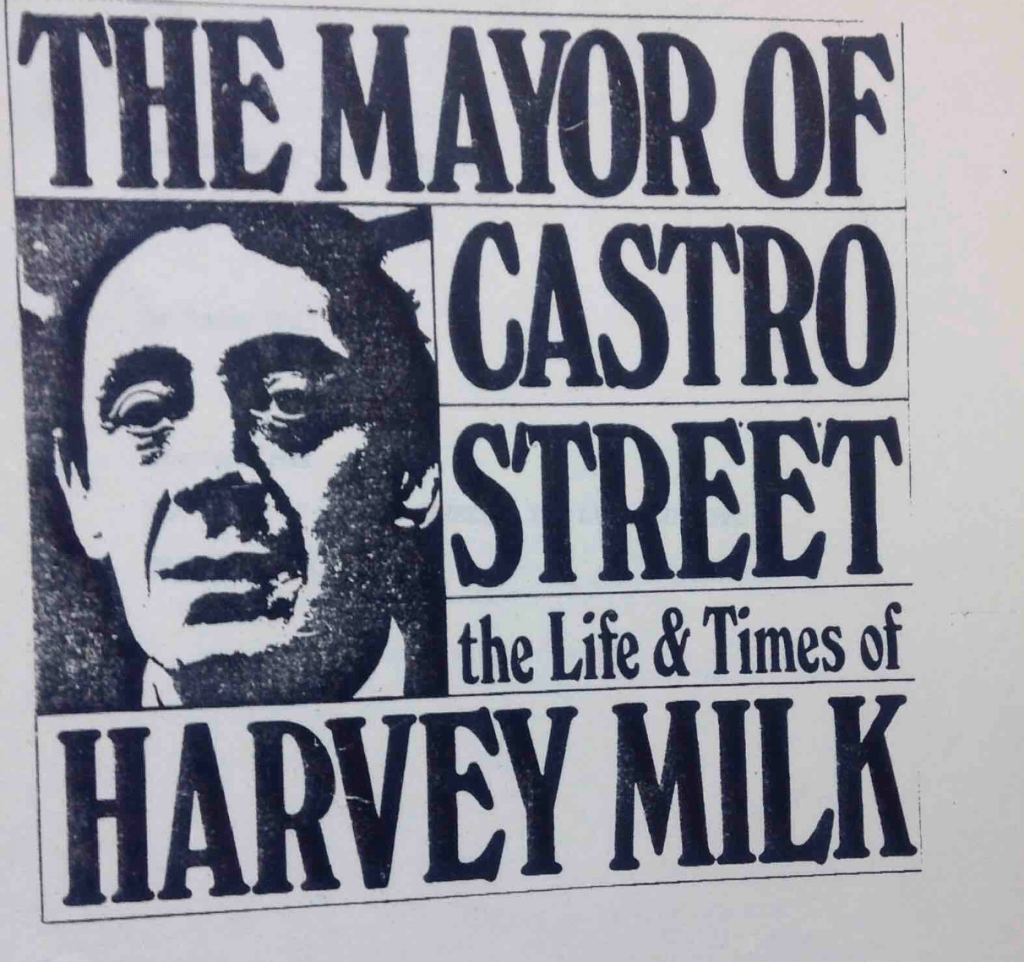
When I finished the first draft of When the Band Played On, I knew I’d have to cut 75,000 words before it went to press. Along the way, I had to make some hard choices about what to keep and what to leave out. Here’s the second in an occasional series I’m calling “The Shilts Files: What I Know About America’s Trailblazing Gay Journalist.”
This June marks 45 years since the CDC made public its investigation of new mysterious illnesses and deaths among urban gay men, many of them young, who had otherwise been in good health. To commemorate this occasion, activist Cleve Jones, a longtime friend of Randy Shilts, recently spearheaded a weeklong series of events called “Seven Days in June.” At a moment when medical science seems closer than ever to effectively ending HIV, the communities who are still heavily affected by the pandemic remained highly worried that politics as usual could once again undermine these crucial efforts. Let’s take a look back at what Randy and others were seeing in those first couple years.
1981 – 1982: From “Gay Cancer” to “GRID”
Worries that a new, potentially deadly disease outbreak had been circulating among gay men for some months, but the information so far had been too scant to draw any meaningful conclusions. “In the period October 1980-May 1981, 5 young men, all active homosexuals, were treated for biopsy- confirmed Pneumocystis carinii pneumonia at 3 different hospitals in Los Angeles, California,” the CDC’s Morbidity and Mortality Weekly Report had noted. “Two of the patients died. All 5 patients had laboratory-confirmed previous or current cytomegalovirus (CMV) infection and candidal mucosal infection.”
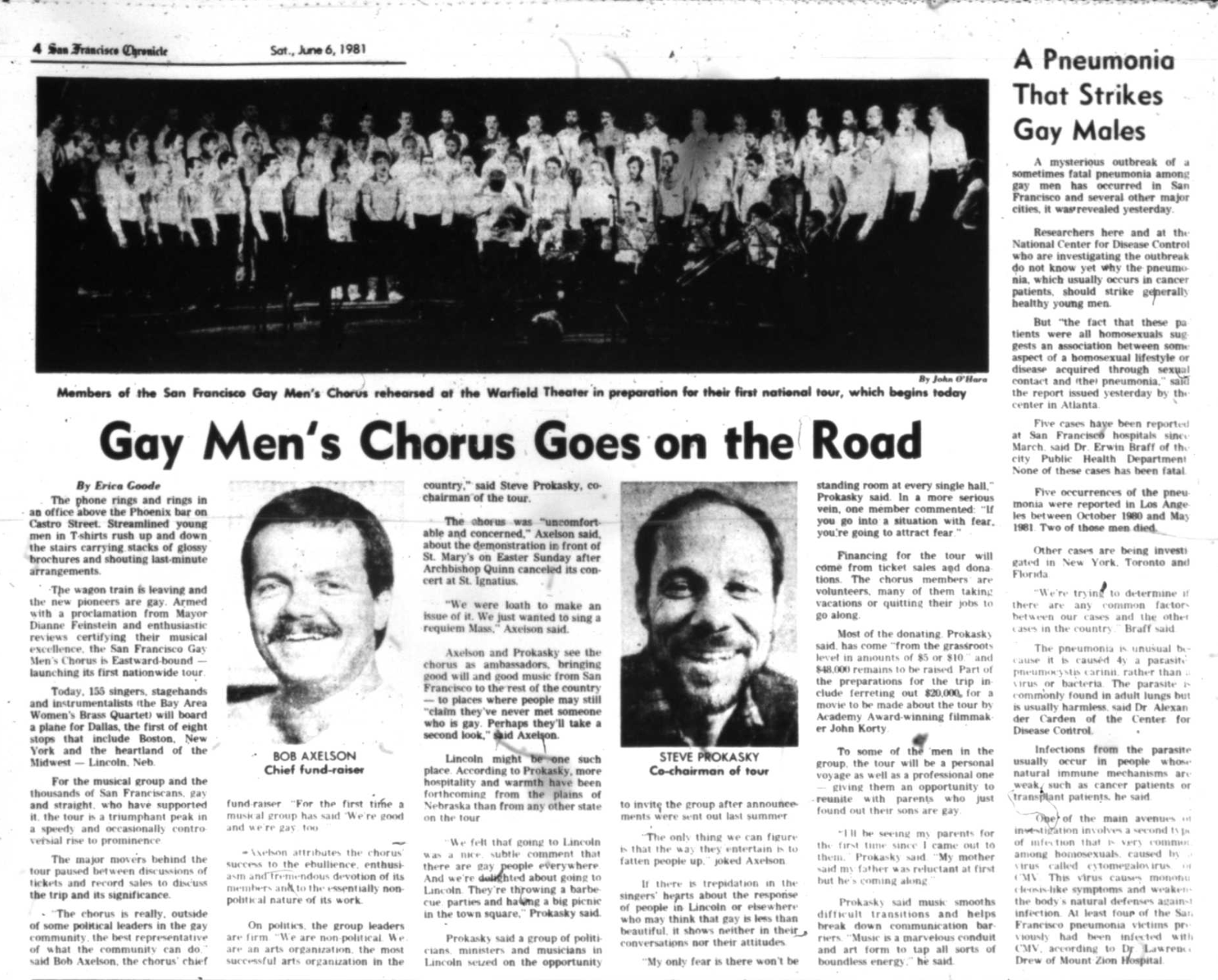
Coverage in the gay press remained somewhat muted at first, with the exception of Dr. Lawrence Mass in the New York Native, wholaid out a methodical examination of all the possible explanations for so-called “gay cancer,” noting that all the various cases seemed to be linked by a common underlying condition: suppression of the immune system. “Obviously, the ‘somethings enjoyable’ are all coming under scrutiny as possible factors, since it is largely, but not exclusively our sexual activities that set us apart from heterosexual people,” Dr. Robert Bolan, a co-founder of Bay Area Physicians for Human Rights, noted in the Bay Area Reporter’s first gay cancer story. “No clear associations have emerged as yet between specific sexual activities or number of partners and any of these conditions.” For now, Bolan noted, the work was only just beginning. Doctors and researchers needed more time to study the evidence, meaning this was a moment not for panic or presumption, but measured caution and concern.
At the time of the CDC’s announcement, Randy was still a freelancer, having just submitted the final chapters of The Mayor of Castro Street to his publisher and basking in the glow of a whirlwind new romance with his lover Steve Newman. Coverage in the San Francisco Chronicle fell mainly to science editor David Perlman, which continued even after Randy joined the staff in late August 1981. Soon after, scientists began calling it “GRID,” short for Gay-Related Immune Deficiency. Apparently “gay cancer” didn’t adequately tell the story of how this still-unidentified monstrosity attacked the bodies of its hosts. And even though heterosexual men and women were now known to be infected, the name stuck for a while, owing to the high concentration of cases in large homosexual communities.
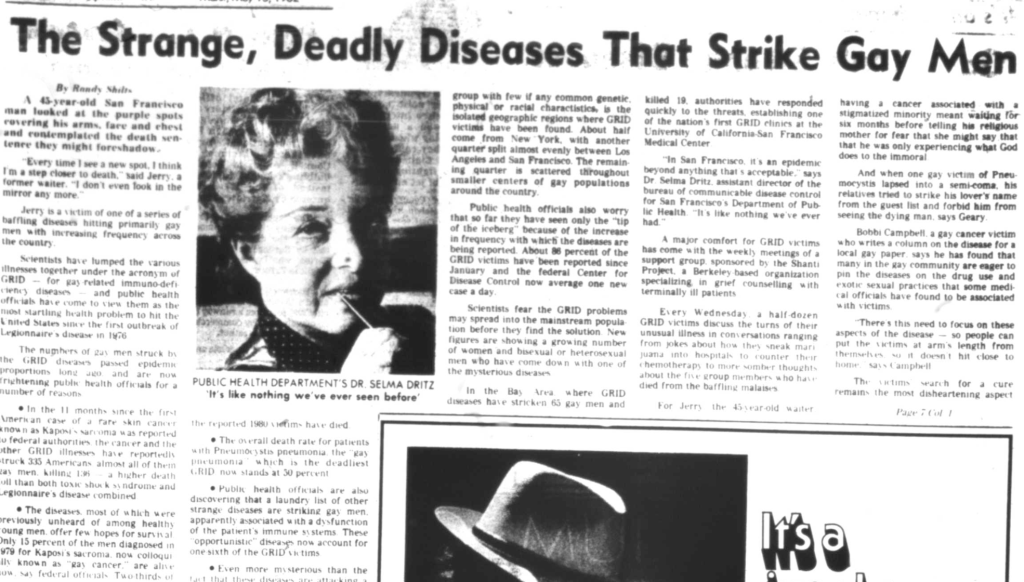
By the end of 1981, more than 230 known patients were reported to have died from the still-unnamed medical condition, and for physicians on the frontline, nothing would be quite as frightening as the onslaught on patients’ bodies they were already witnessing. While touring for The Mayor of Castro Street in early 1982, Randy would later recall, people kept asking, what was the story behind this gay cancer? But for the most part, up until now, he knew about as much as anyone else who was following the gay press or reading the science pages. Nearly a full year after the MMWR announcement, his first story, “The Strange, Deadly Diseases That Strike Gay Men,” would appear in the Chronicle on May 13, 1982.
With several months gone by and few breakthroughs or discoveries to note, his use of the phrase “death sentence,” though ominous, could hardly be considered inaccurate or misleading for the time. Randy described how groups for men diagnosed with GRID now featured among the Bay Area’s upcropping of social supports. As the ‘70s-era self-help movements had demonstrated, the company of others afflicted by the same condition could offer a measure of solidarity and comfort. At the same time, it was hard not to recognize a note of inevitability: an astonishing two-thirds of Kaposi’s sarcoma patients diagnosed in 1980 had already passed away, while the overall death rate among those with pneumocystis carinii pneumonia had climbed to thirty percent.
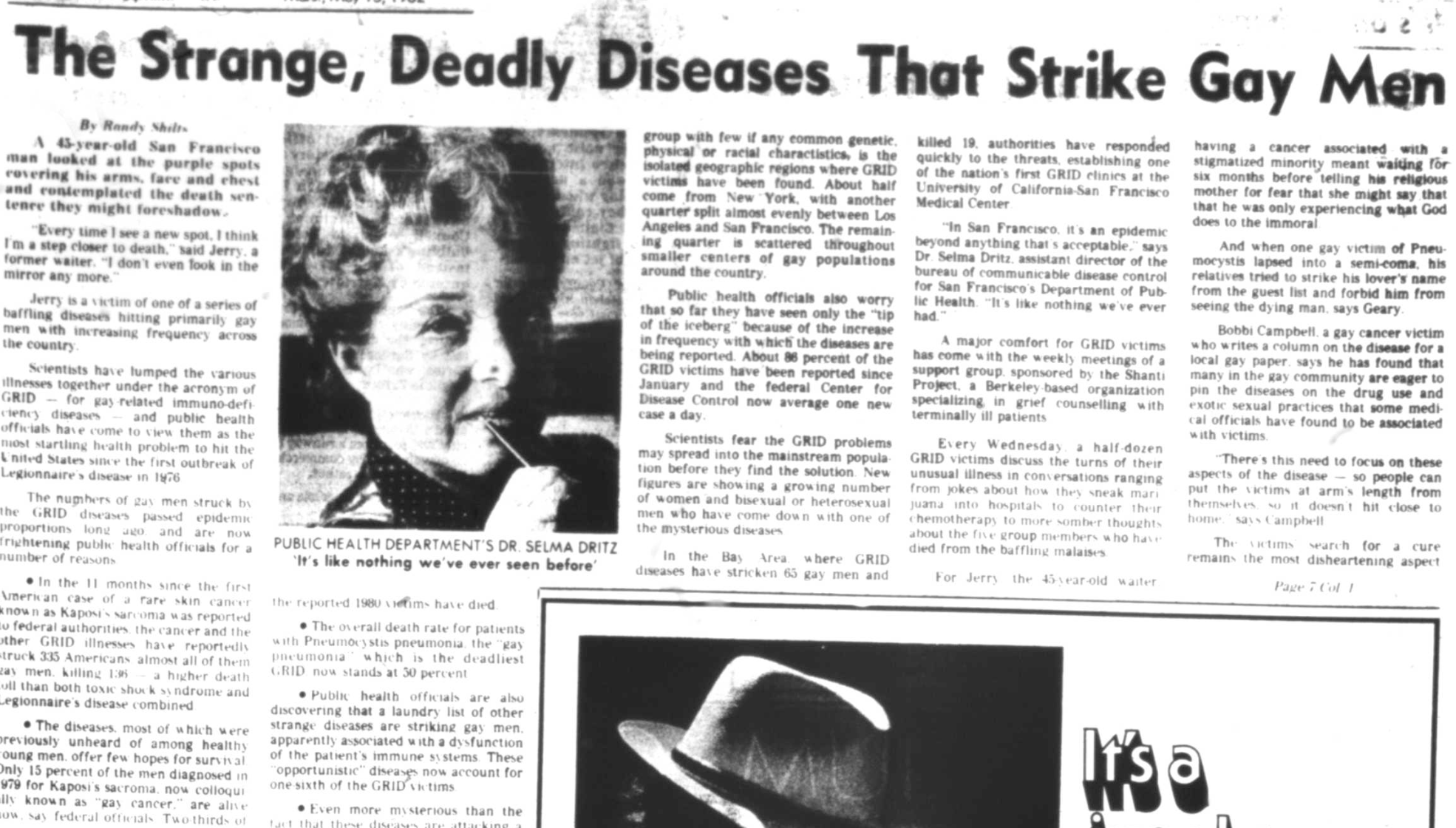
“The numbers of gay men struck by the GRID diseases passed epidemic proportions long ago and are now frightening public health officials for a number of reasons,” Randy observed. At a rate of one new case per day reported to CDC, scientists were facing the unnerving prospect of widespread contagion across the general population, before they even knew for certain what was causing the disease. In her office at the San Francisco Department of Health, Dr. Selma Dritz had already established a command post to manage the city’s response.
Aided by her constantly updated, hand-drawn wall chart – an “STD tree,” in the parlance of public health and communicable diseases – disease investigators could trace the progression of infection from one person to another, illustrating the clusters of cases as new patients detailed their sexual histories. To Dr. Dritz’s colleagues, her attention to detail and dedication to thoroughness was an absolute marvel. “I mean, she was terrific,” Director of Public Health, Dr. Mervyn Silverman, recalled. “I have nothing but praise for her. Very quiet, but just really, really good.” From his earlier reporting on VD, Randy to knew to give Selma Dritz’s warnings their due attention; the story stuck closely to the evidence available, as grim as that evidence might seem.
Backed by city funding, Dr. Marcus Conant assembled UCSF’s first AIDS research team in 1982, which accompanied the opening of San Francisco General’s Ward 86, a first-of-its kind AIDS clinic headed by Drs. Paul Volberding and Donald Abrams, and Ward 5b, the accompanying in-patient wing for AIDS patients with acute symptoms, who were dying or near death. With offices housed at Ward 86, Conant’s research team could hardly ignore the urgency of the moment, or its larger scientific implications. With no conclusive test or any signs yet of a promising treatment, a person who was already infected faced long odds for survival. This vicious little organism, whatever it was, seemed to infiltrate and bombard its human hosts so decisively that, even if it took years, their immune systems would finally succumb to any number of opportunistic infections.
“It’s like it did things that a virus – a smart virus – shouldn’t do,” Paul Volberding later remembered. “Because viruses aren’t supposed to kill 100% of people – you know?” By the end of 1982, the United States had recorded a total of 853 deaths among known AIDS patients, a number that would pale in comparison to the body count to be tallied the following year and beyond.
List of Selected Sources
Robert Bolan, M.D., “New Bugs… No Alarm,” Bay Area Reporter, August 13, 1981.
Fighting AIDS Continuously Together (FACT), “A Brief Timeline of AIDS.” http://www.factlv.org/timeline.htm
M. S. Gottlieb et al., “Pneumocystis Pneumonia—Los Angeles,” Morbidity and Mortality Weekly Report 30, no. 21 (June 5, 1981): https://www.cdc.gov/mmwr/preview/mmwrhtml/june_5.htm.
Lawrence Mass, M.D., “Cancer in the Gay Community,” The New York Native, July 27-August 9, 1981.
Randy Shilts, “The Strange, Deadly Diseases That Strike Gay Men,” San Francisco Chronicle, May 13, 1982.
Mervyn Silverman, interview by the author, El Cerrito, CA, March 16, 2016.
Paul Volberding, interview by the author, San Francisco, March 21, 2016.