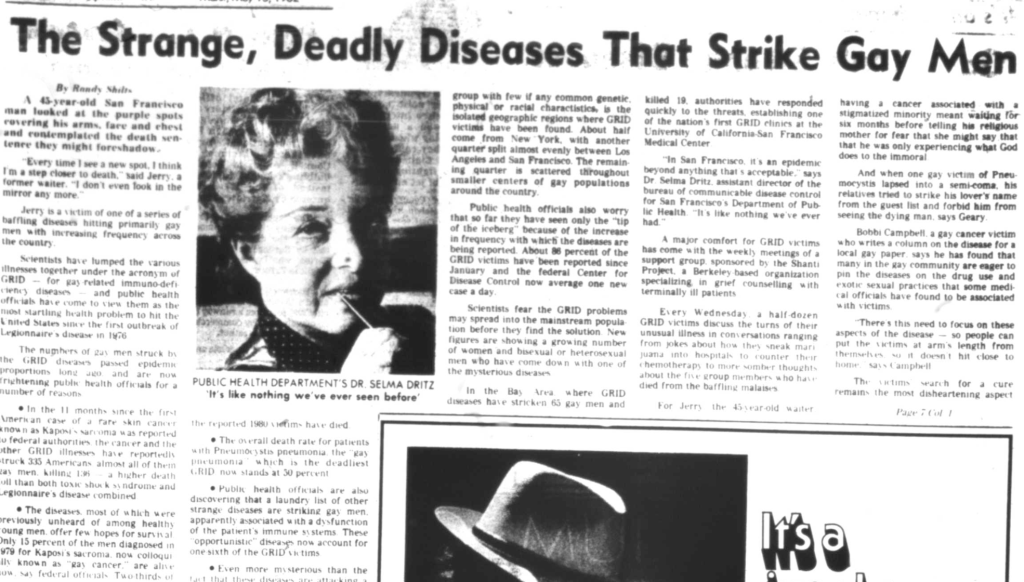
When I finished the first draft of When the Band Played On, I knewI’d have to cut 75,000 words before it went to press. Along the way, I had to make some hard choices about what to keep and what to leave out. Here’s the third in an occasional series I’m calling “The Shilts Files: What I Know About America’s Trailblazing Gay Journalist.”
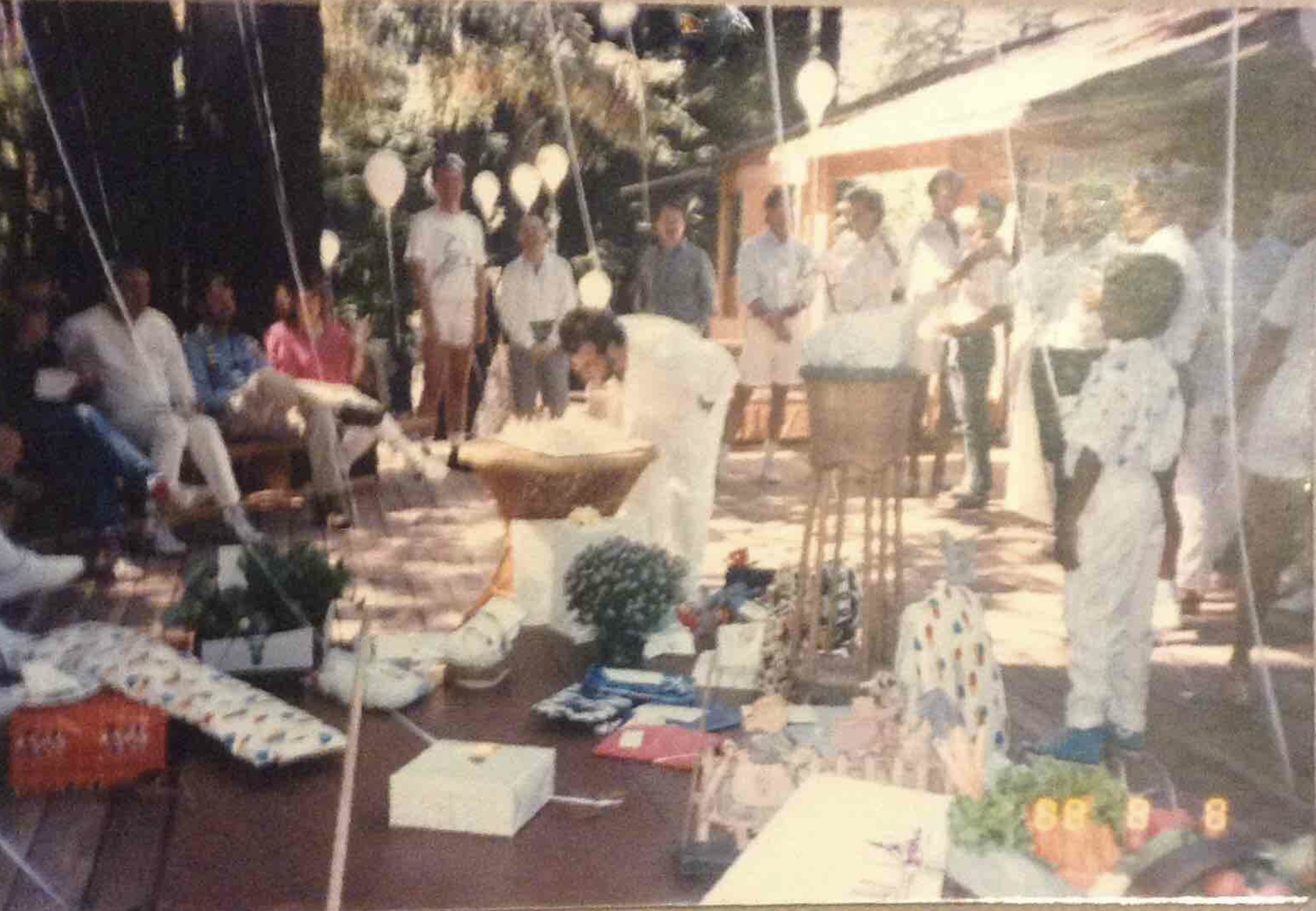
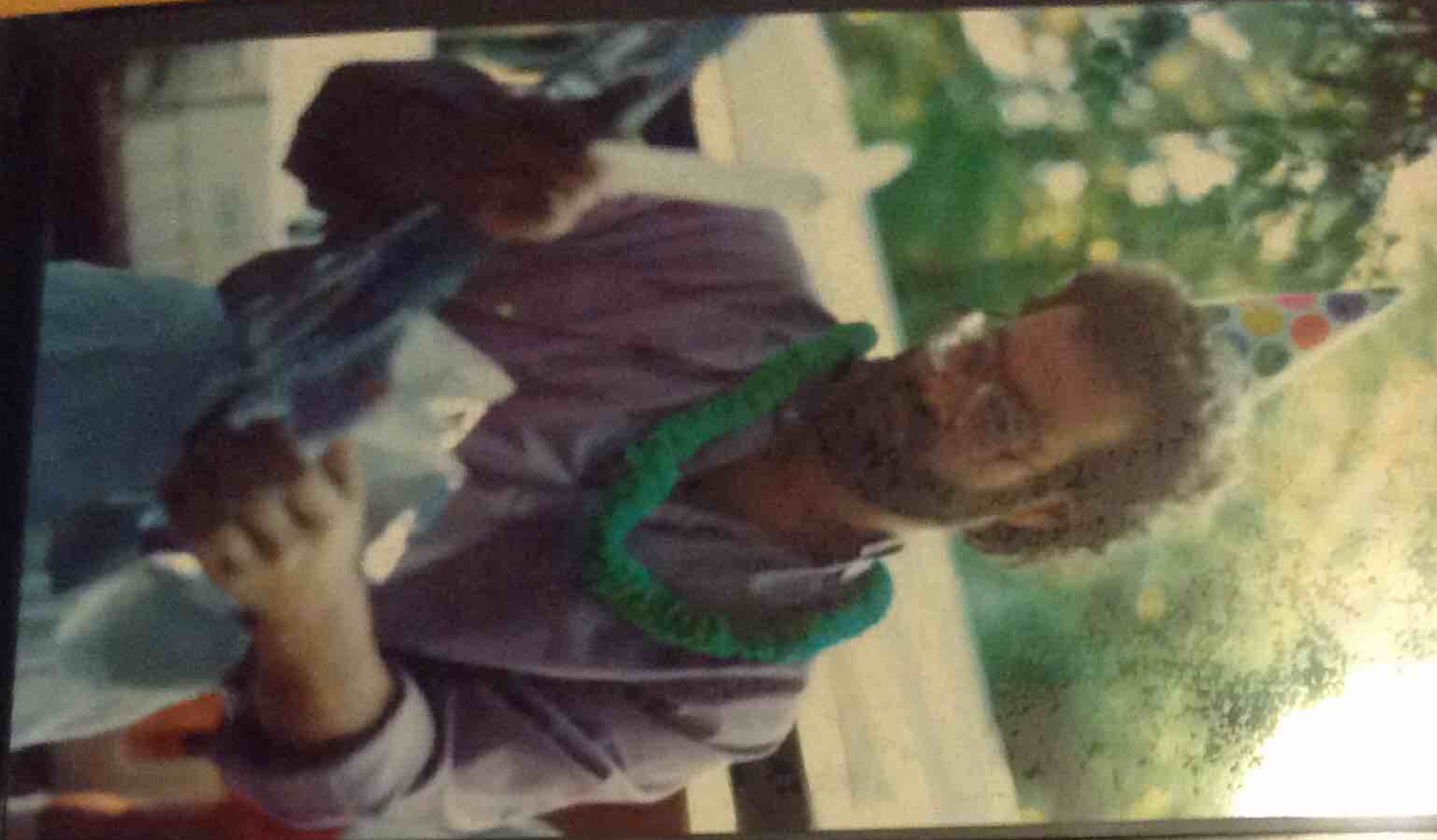
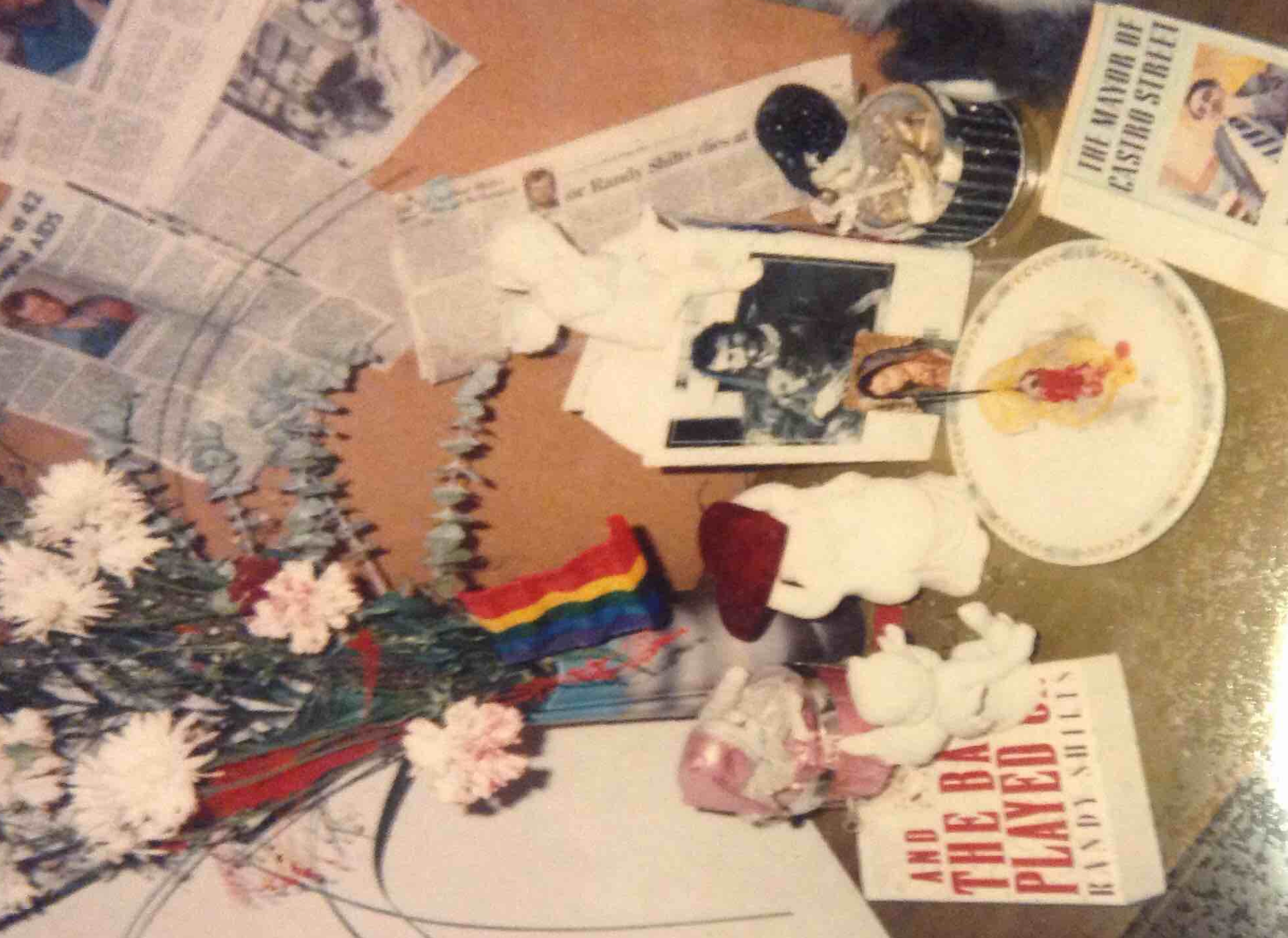
August 8, 2026, marks what would have been Randy Shilts’s 75th birthday. While the first “official” Shiltsmas party occurred in 1988 (i.e., 8-8-88), his use of that term dates all the way back to 1970, according to his oldest friend Linda Alband. Like too many of his contemporaries, Randy left us far too soon. For this edition of The Shilts Files, I am going to share the unpublished parts of When the Band Played On that focused on Randy’s substantial, and perhaps forgotten, legacy.
Estate Fights and A (Mostly) Accurate Prediction
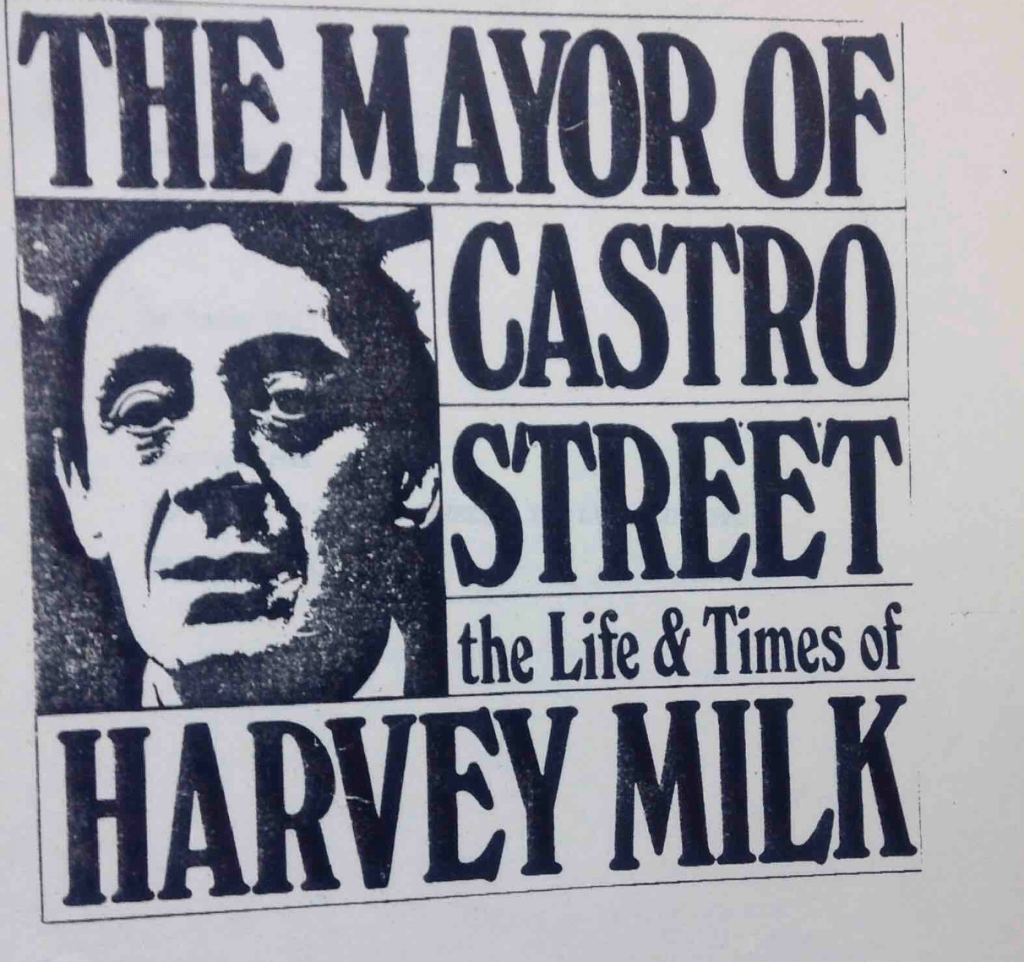
For someone who became so famous in such an unprecedented fashion, Randy Shilts’s disappearance from the public consciousness would seem surprising, if not for certain factors. First, the condition of Randy’s estate, including prolonged, acrimonious litigation between his partner Barry and other members of Randy’s intimate circle, kept any one person from doing the work of keeping his accomplishments fresh in the public’s mind. In contrast, his oldest friend and business partner Linda Alband pointed out how Harvey Milk’s former lover Scott Smith had devoted himself to preserving and promoting Milk’s legacy, treating it like a part-time job. When Scott died in 1995, Linda helped with organizing the donation of his and Harvey’s papers to what would become the James C. Hormel LGBTQIA Center at the San Francisco Public Library. Later, she donated her own collection of Randy’s papers to the GLBT Historical Society in San Francisco. “The reason that Harvey is so well-remembered is that Scott cultivated his memory,” she explained. “But nobody’s really done that for Randy.”
The second factor concerns the timing of Randy’s passing. In 1994, the number of U.S. AIDS deaths reached a new peak of more than 32,000, a figure which would increase by another fifty percent the following year. At the Montreal AIDS Conference in 1989, Randy predicted that a breakthrough in treatments would come by 1996, showing just how well he was dialed into the medical research of the time. Indeed, that year would record the first decline in American AIDS fatalities in fifteen years, thanks to the arrival of a new generation of highly active, antiretroviral therapies. In what many would compare to a Lazarus-like effect, patients were described as leaving their deathbeds and resuming lives they assumed were lost, albeit it with a medication regimen involving an astonishing number of pills, complicated regimens, high out-of-pocket costs, and a labyrinthine system of drug payment assistance through Federal and state programs. The only aspect of Randy’s prediction which fell short that day was that he would be there, alongside everyone else, reporting on the triumph.
After a decade and a half, the change in prognosis from certain death to lifelong, chronic illness brought a gradual decline and leveling off to U.S. AIDS fatalities, although as Randy and others had predicted, the face of American HIV has continued to grow younger, poorer, and darker-skinned, compared to the white gay men who once dominated its depictions in popular media. In the wake of this change, many gays, along with American society in general, seemed to pick up and move on, as red AIDS awareness ribbons started to fade into the tapestry alongside a host of other causes. In 2006, journalist and filmmaker Carrie Lozano produced Reporter Zero, a brief documentary including interviews with Randy’s former lover Steve Newman, his colleague David Perlman, his book editor Michael Denneny, and a handful of others. Six years later, the Library of Congress included And the Band Played On in its list of 100 books that changed America. Still, popular culture seemed to move on from HIV/AIDS, and with it the once-eminent profile of Randy Shilts continued to fade.
Enduring Criticism
Third, the criticism of Randy’s journalism undoubtedly played a role in diminishing his influence in the mainstream, once he was no longer alive to promote or defend his work. Yet, in academic literature, a simple search of Google Scholar reveals more than 2,700 listings for publications mentioning Randy Shilts since 2000. After leaving the CDC and joining the faculty of Florida International University, Dr. William Darrow published his own tribute to Randy in The Journal of Sex Research. While acknowledging the flaws in both Band and its author, Darrow agreed that the events which he’d witnessed were portrayed accurately, and that the world would miss “hearing [Randy’s] persuasive voice and reading his convincing prose.” In 2017, Darrow returned to Randy and Band as a scholarly topic, authoring a thirty-year retrospective which detailed the book’s accomplishments and the critical reaction of historical scholars, including a table detailing a half-dozen errors or inaccuracies.
In highlighting the continued debates around Band’s legacy, Darrow partially credited Randy for influencing a 1990s-era change in federal policy, when the CDC began requiring state health departments to actively involve and gain agreement from HIV-affected communities when setting prevention funding priorities for their jurisdictions. “Randy Shilts taught us 30 years ago there was no excuse for political inaction when practicing physicians and public health epidemiologists first recognized the earliest signs of the AIDS pandemic,” Darrow wrote. “His main point of contention, that it is better for public health authorities to act on incomplete and imprecise information to save human lives than it is to wait for science to deliver more accurate answers, should have been heeded.”
Among present-day critics, the major point of contention has continued to be Gaetan Dugas. Historian Richard McKay’s dissertation and subsequent book, Patient Zero and the Making of the AIDS Epidemic, offered a well-founded warning about the consequences of allowing such origination stories to cloud the investigation and narrative-making of communicable diseases. And in his 2019 academic biography The Journalist of Castro Street, communication scholar Andrew Stoner documented these criticisms to highlight the consensus of historians who condemned the Patient Zero narrative, with many focusing on the injustice done to Gaetan, and by extension his surviving family. Interestingly, when Canadian filmmaker Laurie Lynd set to work on a documentary intended to clear the name of Gaetan Dugas, he came away sufficiently impressed with Randy’s accomplishments to make a Shilts documentary one of his future film projects.
Yet, as Randy’s editor Michael Denneny frequently insisted, Randy was an investigative journalist, not a professional historian. As someone who was living and witnessing historical events as they occurred, Denneny believed that Shilts’s work merited respectful consideration as an act of making history, not as a scholarly interpretation of historical acts. Michael felt it was imperative to remember the distinction between primary discourse, which Randy and others were actively creating, and secondary discourse, i.e., making an interpretation of the primary discourse.
A Life Shaped By Context
Almost from the moment Randy began writing in the gay press, his stories provoked not just accolades, but also community backlash for illuminating the struggles many of his contemporaries faced with alcoholism, drug abuse, and sexual health. In using his friendship with John Briggs to expose the Republican Senator’s cynical exploitation of conservative voters, Randy also ran afoul of many activists, who first labeled him a “traitor” and “sellout.” His youthful ambitions, cocky façade, and brash sense of humor certainly contributed to the hostility he later faced. However, as part of a minoritized group in which many harbored their own experiences of homophobia, violence, abuse, and ostracism, his desire for love, recognition, and fame hardly stands out as unusual among his peers.
When considering the details of Randy’s upbringing and coming of age, it would be overly simplistic to classify his combativeness as an inherent character flaw without also recognizing it as a well-honed defense mechanism of a once-bullied schoolchild, who learned at an early age how to adapt to life in an abusive, alcoholic home. Toward the end of his life, Randy was beginning to understand the intergenerational nature of abuse, neglect, and trauma, as well as the need to bring painful past experiences out into the open so that healing could begin. Sadly, those reflections came too late for any sort of meaningful conversation or reconciliation with those who, in reckoning with their own painful experiences, had come to see him as the enemy of his own community.
Nothing in Randy’s experiences had prepared him for the trauma of the early AIDS crisis, and it is no coincidence that his reporting on gay bathhouses escalated during a period when he was first reckoning with his own struggles with addiction, including the role it likely played in his contracting HIV. If his coverage seemed to border on zealotry, however, the record shows that Randy wasn’t on a “one-man crusade,” as some claimed, but was standing in the same corner as other gay activists and journalists, including Larry Kramer, Bill Kraus, Frank Robinson, Randy Alfred, and more. For many, the Patient Zero story remained an unforgivable offense, but any claim that And the Band Played On is primarily focused on the story of Gaetan Dugas is not supported by the content of the book itself.
“Band was written in an [Alcoholics Anonymous] context,” his research assistant Jennifer Finlay emphasized. From early 1984 until late in life, Randy spent significant time each day in AA meetings, working with a sponsor, and eventually acting as a sponsor to others. For those characterizing his depiction of Gaetan and other gays as slanted toward evil, a closer read of AA literature, especially its “Big Book,” would reveal its consistent emphasis on bringing one’s struggles and vulnerabilities out into the open; recognizing the capacity of otherwise well-admired people to behave in ways that may shock the casual observer; and acknowledging the predilection of individuals wrestling with addiction to spiral toward rock bottom before confronting their inner demons. Looking past the discredited “Patient Zero” moniker, we can see Gaetan Dugas as one of many gay men who initially struggled when forced to adapt to the emerging realities of AIDS. So did Randy Shilts. Regardless of how one views their actions, the historical record for both men would benefit from a stronger emphasis on compassion for the crises they each were forced to endure.
Even as various disciplines continue to debate Randy’s legacy, it took a surprisingly long time for the intimate, in-depth character portrait to materialize. From the outset, my goal for When the Band Played On was to situate Randy’s actions in the context of his most influential relationships and character-defining struggles. By bringing the full complexities of Randy’s character into the discourse concerning his legacy, my hope is that future appraisals, scholarly or otherwise, will be strengthened by taking into consideration the deeper, more multifaceted aspects of his substantial lived experiences.
List of Selected Sources
William W. Darrow, “In Memoriam: Randy M. Shilts, 1952–1994,” Journal of Sex Research 31, no. 3 (1994): 248-249.
William W. Darrow, “And the Band Played on: Before and After,” AIDS Behav 21, no. 10 (2017): 2799-2806.
William W. Darrow, “In Memoriam: Randy M. Shilts, 1952–1994,” Journal of Sex Research 31, no. 3 (1994): 248-249.
William W. Darrow, “And the Band Played on: Before and After,” AIDS Behav 21, no. 10 (2017): 2799-2806.
Michael Denneny, On Christopher Street: Life, Sex, and Death after Stonewall, 2023, University of Chicago Press.
Killing Patient Zero, directed by Laurie Lind (Fadoo Productions, 2019)
Richard McKay, Patient Zero and the Making of the AIDS Epidemic, 2017, University of Chicago Press.
Reporter Zero, directed by Carrie Lozano (Swell Cinema, 2006)
Andrew Stoner, The Journalist of Castro Street: The Life of Randy Shilts, 2019, University of Illinois Press.